Trying to choose between a Houston townhome and a single-family house inside the Loop? You are weighing lifestyle, financing, maintenance, and risk in a market where location sets the tone. This guide breaks down what changes by property type in Houston, what to check before you offer, and a simple way to decide with confidence. Let’s dive in.
Houston market at a glance
Houston’s Inner Loop neighborhoods like Montrose, Midtown, the Heights, Museum District, River Oaks, and West University carry a clear location premium. Closer-in homes often trade at higher price-per-square-foot than the citywide median, which is one reason buyers consider attached options to stay central. Citywide, townhome and condo pricing trends have historically differed from single-family trends, and inventory can move on a different cycle.
For current benchmarks and months of inventory by property type, review the latest market snapshot from the Houston Association of Realtors. You will see townhome/condo data tracked separately from single-family homes, which helps you set expectations by neighborhood and product type. HAR’s 2025 summary is a good starting point.
Townhome vs house basics
Ownership and insurance
“Townhome” in Houston is a marketing term. Legally, an attached unit can be a fee-simple townhouse where you own the land and structure, or it can be a condominium where you own the interior/airspace and the association owns common elements. Texas law treats condominiums under the Uniform Condominium Act, which sets governance and disclosure rules. You can review the statute for context in Texas Property Code Chapter 82.
HOAs for non-condo communities are covered under the Residential Property Owners Protection Act. The resale packet and governing documents outline who maintains the roof, exterior, and shared areas, and what the association insures. Read them early so you know your responsibilities under Chapter 209.
Financing and eligibility
Fee-simple townhouses and homes in PUDs are often underwritten similarly to single-family detached properties. Condominiums may require a project review to be “warrantable” under conventional guidelines, and some small or conversion projects can limit loan options or raise down-payment needs. You and your lender should confirm property type and project eligibility at the start. See Fannie Mae’s guidance for how lenders classify and review properties (Fannie Mae Selling Guide).
If you plan on FHA or VA financing, ask whether the project is approved or can qualify for single-unit approval. You can search FHA condo approvals on HUD’s site (FHA condo approval lookup).
Monthly costs and HOAs
With condominiums, the association often maintains exteriors, roofs, and shared spaces, and carries a master insurance policy for common elements. In fee-simple townhomes and single-family homes, you typically handle more exterior maintenance directly. Homeownership costs vary with age, size, and finishes, and many owners set aside funds each year for upkeep and repairs. For broad context on ownership costs and budget planning, review this overview of typical homeowner expenses (Bankrate’s cost guide).
HOA dues can shift costs like landscaping, trash, and exterior insurance into one monthly fee. Always review the association budget, reserves, recent meeting minutes, and any special assessments in the resale packet before you offer.
Lifestyle trade-offs inside the Loop
Outdoor space
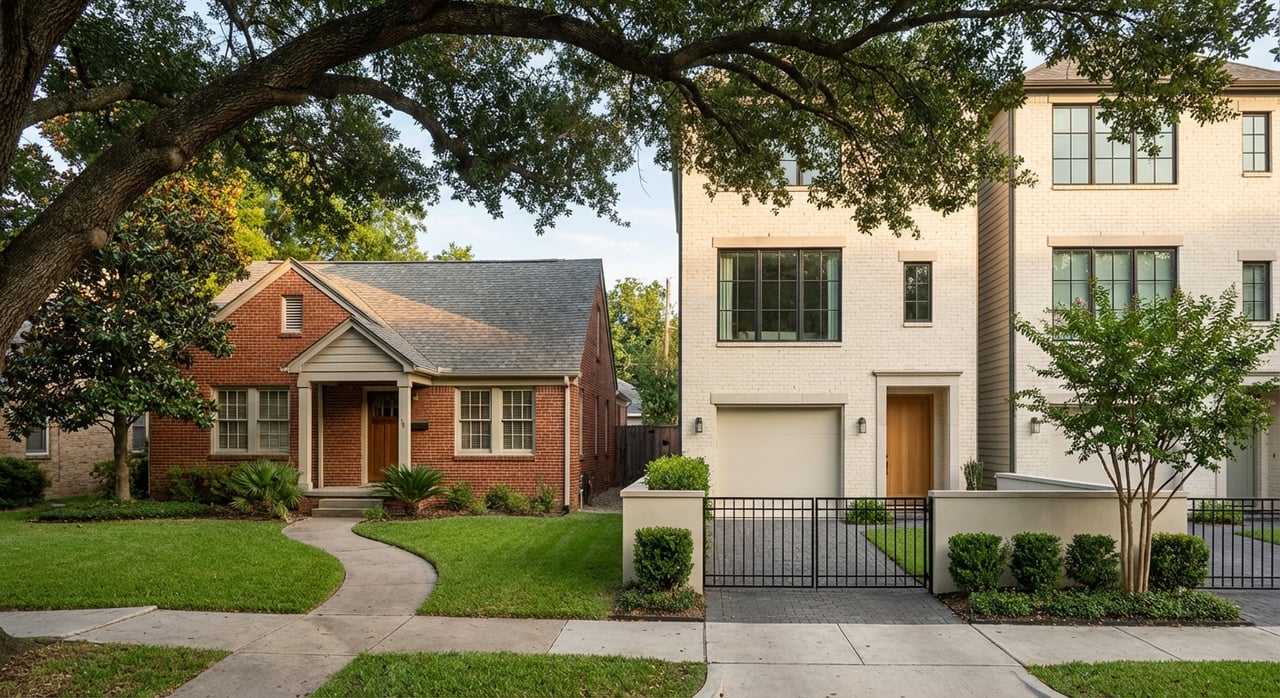
Single-family homes inside the Loop often provide more private yard space than attached townhomes, even though lots are smaller than in the suburbs. Townhomes tend to prioritize interior square footage and location over large backyards. Many attached options still offer patios, small yards, or rooftop decks, which can be ideal if you want low-maintenance outdoor living.
Parking and access
Inner-Loop townhomes are frequently vertical and narrow, with one- or two-car garages and limited driveway space. If curb parking matters, confirm the rules on your block and whether nearby streets already use the City’s Residential Permit Parking program. You can check how that program works through ParkHouston’s FAQs (Residential Permit Parking).
Flood and taxes in Houston
Flood mapping and insurance
Flood risk is a critical part of buying in Harris County. The county’s MAAPnext effort and FEMA’s draft updates are refining flood models, and future regulatory maps may expand mapped risk in some areas. Treat flood mapping as a near-term, evolving input during due diligence, and review the latest tools before you offer (HCFCD/MAAPnext guide).
FEMA’s Risk Rating 2.0 now prices National Flood Insurance Program policies using property-specific factors like distance to water, elevation, and rebuild cost. That can raise or lower premiums compared with past rules. If your property is in a Special Flood Hazard Area and you use a federally backed mortgage, flood insurance will be required. Learn how pricing works and get an early quote (FEMA Risk Rating 2.0 overview).
Property taxes and valuation
Property taxes are a major ongoing cost in Harris County. Look up the exact parcel in HCAD to review the current appraised value, recent trend, exemptions, and the list of taxing units for that address. This can vary block by block inside the Loop. Use HCAD’s online tools when modeling your monthly budget (HCAD property lookup).
Your decision framework
Use this to match the right property type to your life and budget:
Lifestyle fit. Decide how much you value a private yard, low exterior maintenance, walkability to dining and entertainment, and guest parking. Be specific about must-haves.
Budget fit. Model your monthly payment including principal and interest, property taxes, homeowners insurance, HOA dues if any, and a maintenance reserve. Be sure to add a flood insurance quote when relevant.
Financing fit. If FHA or VA is important, confirm property type and project eligibility before touring. If you plan to go conventional, ask your lender how they will treat the property type.
Risk fit. Set your tolerance for flood exposure and premium levels, and confirm whether any draft map changes could affect insurance or lending later.
HOA fit. Review association health: reserves, budgets, special assessments, meeting minutes, and insurance coverage. Weak reserves or frequent special assessments deserve extra scrutiny.
Quick scoring rubric
Give each factor 0–2 points, then total your score.
- Yard need: 0 none, 1 small patio ok, 2 private yard required
- Maintenance tolerance: 0 low, 1 medium, 2 high
- Parking need: 0 one car ok, 1 two cars, 2 off-street plus guest
- Flood tolerance: 0 no mandatory flood insurance, 1 low premium ok, 2 high premium ok
- Financing flexibility: 0 FHA/VA required, 1 conventional ok, 2 cash/other
Lower totals often point to townhomes or condos. Higher totals often point to single-family detached.
Address-level due diligence
Work through these checks before you write an offer.
- Confirm legal form and title. Is it fee-simple or a condominium? Ask for the declaration, plat, bylaws, and master insurance policy where applicable. Use Texas Property Code Chapter 82 for context on condo governance.
- Order the HOA resale packet. Request the management/resale certificate, current budget, reserve statements, recent meeting minutes, insurance declarations, any special assessments, and any litigation. See general HOA rules in Chapter 209.
- Verify lender eligibility. Ask your lender whether the property is treated as SFR/PUD or condo and whether the project is warrantable. If you need FHA or VA, ask about approval or single-unit options. Reference the Fannie Mae Selling Guide and check HUD’s FHA condo lookup.
- Check flood risk and insurance. Review MAAPnext and FEMA tools, then get a written flood quote. Start with HCFCD/MAAPnext and FEMA Risk Rating 2.0.
- Confirm taxes and exemptions. Pull the parcel in HCAD to see current value, taxing units, and any exemptions, then model the impact on your payment.
- Review parking and curb rules. If guests or a second car matter, confirm garage size, any deeded spaces, and whether the street requires permits via ParkHouston’s RPP FAQ.
- Ask about neighborhood constraints. Deed restrictions, historic districts, and private covenants can shape what you may change on the exterior or what can be built nearby.
- Study comps and demand. Compare attached vs detached sales within the same micro-neighborhood, including price per foot and days on market. Your agent should pull recent HAR data to guide pricing and offer strategy.
Red flags to avoid
- Association documents missing, outdated, or incomplete.
- Little or no reserves and a history of special assessments.
- Non-warrantable condo projects that limit conventional financing.
- Draft flood maps or MAAPnext data showing new or increased risk for the block.
- A list price far below recent comps without a clear explanation. Always order full inspections and a title review.
Ready to compare real options in your favorite Inner Loop neighborhoods and build a clean side-by-side of costs, risks, and lifestyle fit? Reach out to Jennifer Delaney to map the best path, from first tour through closing.
FAQs
What changes most between a Houston townhome and a house?
- Ownership and responsibilities. Many condos cover exterior maintenance and insure common elements, while fee-simple townhomes and houses put more exterior upkeep on you. Always verify the legal form and HOA documents.
How do HOAs in Houston affect what I can change?
- Governing documents set design controls and maintenance rules. Read the bylaws, design guidelines, and meeting minutes in the resale packet to see what is allowed before you plan exterior work.
Can I use FHA or VA for a Houston townhome or condo?
- Often yes, but condos may need project or single-unit approval and must meet underwriting rules. Check with your lender early and confirm status with FHA/VA resources.
How do I check flood risk for a specific Inner Loop address?
- Review Harris County’s MAAPnext tools and FEMA’s resources, then get an address-specific insurance quote. This flags current and possible future insurance requirements.
What parking rules should I confirm near a townhome?
- Verify garage capacity, any deeded spaces, and whether street parking needs a Residential Permit Parking decal. Ask the seller and check ParkHouston’s permit program.
How do property taxes vary across Houston addresses?
- Taxes depend on the mix of taxing units and the county’s appraised value for that parcel. Use HCAD to see current values, exemptions, and recent trends before you offer.