Thinking about buying a duplex, triplex, or fourplex in Houston so your tenants help cover the mortgage? You are not alone. In a city with strong renter demand, a large workforce base, and a meaningful supply of small multifamily housing, house hacking can be a practical way to lower your monthly costs and build long-term equity. The key is knowing where Houston creates opportunity and where it adds friction. Let’s dive in.
Why Houston fits house hacking
Houston’s housing market gives this strategy real context. The city had 2,390,125 residents in July 2024, with 538,885 renter-occupied units out of 930,404 occupied units. That means renter demand is not a side story here. It is a major part of how the local housing market functions.
The city also has actual small multifamily inventory to work with. Houston housing data show 20,505 two-unit properties and 50,524 three-or-four-unit properties. Together, those make up about 6.8% of the city’s housing units, which is still a niche but large enough to create real options for buyers who know what they are looking for.
The regional job market adds another layer of support. In May 2025, Houston metro payroll employment was up by 29.6 thousand from the prior year, with gains across several sectors including trade, transportation, utilities, education, health services, leisure, hospitality, and other services. For a house hacker, that matters because jobs help support rental demand and future resale flexibility.
What house hacking means in Houston
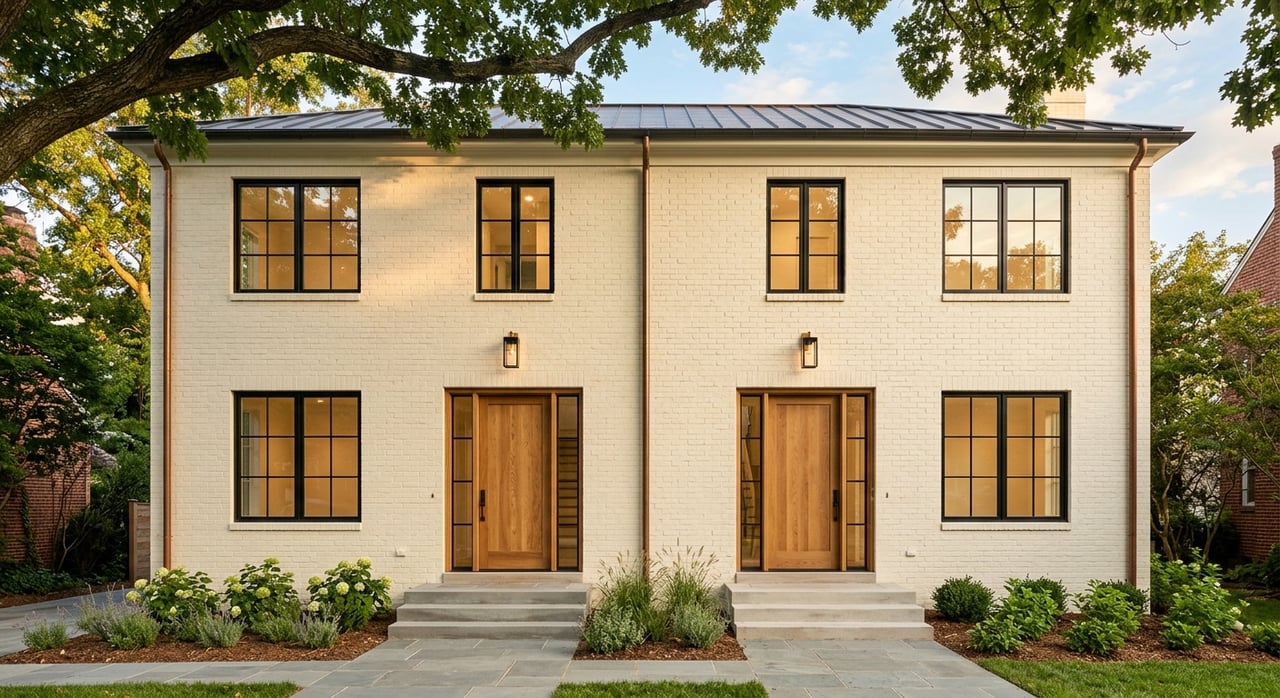
At its simplest, house hacking means buying a property, living in one part of it, and renting out the rest. In Houston, the most practical version is usually a 2- to 4-unit owner-occupied property. You live in one unit as your primary residence and lease the other units to offset your payment.
This can work especially well for buyers who want to start building wealth without jumping straight into a larger investment property. It can also appeal to buyers who like the idea of living in a property now and keeping it later as a full rental. In the right setup, you get both a home and an income-producing asset.
Houston does come with its own rules. The city does not have a city-wide zoning ordinance, but that does not mean there are no restrictions. Development is shaped by local ordinances covering subdivision, setbacks, parking, access, trees and shrubs, and related standards, and separately filed deed restrictions may also apply.
That matters if you are buying an existing small multifamily property, planning to reconfigure one, or considering replacement construction. Houston’s planning guidance notes that platting may be required before building permits in some cases. Some neighborhoods also have minimum lot size or minimum building line controls that can affect what you can build or alter.
Why micro-location matters
One of the biggest mistakes buyers make is treating all of Houston the same. Renter concentration varies widely by area. City data show renter-occupied shares ranging from 37% in District E to 84% in District J, which tells you right away that leasing patterns change a lot across the city.
For you, that means location is not just about commute or curb appeal. It is also about how easily another unit may lease, what kind of rent level is realistic, and how strong your exit options may be later. A good house hack works at the property level, but it starts with a smart micro-market.
This is where local guidance matters. If you are buying inside the Loop or in another high-demand pocket, the conversation should go beyond bedroom count and list price. You want to evaluate the block, the parking setup, the layout, the likely tenant profile, and whether the property makes sense both for living and for future resale.
Financing options for a Houston house hack
For many first-time house hackers, FHA financing is the easiest way in. HUD says FHA loans can be used on 1- to 4-unit properties, and the down payment can be as low as 3.5%. That lower entry point can make a duplex, triplex, or fourplex more achievable than buyers expect.
VA financing can be another strong path if you are eligible. The VA says an eligible borrower may buy a home with up to four units, must live in the property, and may have no down payment if the sales price does not exceed the appraised value. For eligible buyers, that can be a major advantage.
Conventional financing can also work well, especially if you have stronger credit or a larger down payment. Freddie Mac notes that its 2- to 4-unit products are for owner-occupied primary residences and that rental income from the other units may be added to qualifying income. Freddie Mac also notes that Home Possible may allow as little as 3% down for eligible borrowers.
One underwriting detail matters a lot here: do not assume every dollar of projected rent will count. Fannie Mae’s Desktop Underwriter guidance for a 2- to 4-unit primary residence uses 75% of gross rent in its net rental income calculation. In plain terms, lenders often want a built-in buffer, so your numbers need to be conservative from the start.
Houston costs that can change the deal
A Houston house hack is not just about the mortgage payment. The monthly carry often turns on costs that buyers underestimate, especially property taxes, insurance, flood risk, reserves, and vacancy.
Texas has no state property tax, but local taxing units set and collect property taxes. That means your tax bill can vary materially depending on the combination of county, city, school district, and special districts tied to the property. Two similar-looking properties can carry meaningfully different tax loads.
If you plan to occupy one unit, you should also review homestead treatment carefully. Harris County Appraisal District’s residence homestead application asks whether any part of the property is income-producing and what percentage. HCAD says Harris County currently offers a 20% optional homestead exemption, while school taxes receive at least the state-mandated homestead exemption. The practical takeaway is simple: confirm tax treatment before you build your long-term budget around it.
Flood exposure is another Houston-specific screen you should run early. FEMA defines a Special Flood Hazard Area as the 1% annual chance floodplain, and federally backed mortgages generally require flood insurance for properties in those zones. Whether or not a property is in one of those areas can materially affect your monthly payment and your comfort level as an owner.
Using rent benchmarks the right way
Rent estimates can make almost any deal look good on paper, which is why conservative benchmarks matter. HUD’s FY 2026 Houston-The Woodlands-Sugar Land Fair Market Rents list gross rents of $1,323 for a one-bedroom, $1,573 for a two-bedroom, $2,116 for a three-bedroom, and $2,639 for a four-bedroom. HUD defines those as gross rents that include shelter rent plus tenant-paid utilities except telephone, cable, and internet.
These numbers are helpful as a starting point, but they are not guaranteed asking rents. Houston’s citywide median gross rent was $1,313, which points to a wide spread across property types, conditions, and locations. In other words, the right rent for your unit depends on the actual submarket and the actual product.
A better approach is to treat benchmark rents as guardrails, not promises. Then build in room for repairs, turnover, vacancy, and the reality that underwriting may only credit part of the projected rent anyway. If the deal still works with conservative assumptions, that is a much healthier signal.
Loan limits and deal sizing in Harris County
If you are shopping for a small multifamily property in Houston, loan size matters. For 2026, Harris County conforming loan limits are $832,750 for a one-unit property, $1,066,250 for a two-unit property, $1,288,800 for a three-unit property, and $1,601,750 for a four-unit property.
These numbers matter because they help define when a property may stay in conforming territory versus moving into jumbo financing. That shift can affect rates, reserves, underwriting, and overall affordability. For buyers targeting higher-priced inner-loop inventory, this is worth watching from the first property tour.
Smart exit strategies for Houston buyers
A good house hack should not only work for you now. It should also give you options later. In Houston, common exit routes include keeping the property and refinancing, converting it into a full rental after you move, or selling to the next owner-occupant or investor.
That flexibility is part of the appeal. You can start with a property that helps lower your own monthly costs, then turn it into a longer-term asset once your housing needs change. In a city with deep renter demand, that can be a useful path if you buy with the right fundamentals.
If a property later becomes business or investment real estate, there may also be tax-planning options tied to future exchanges of qualifying real property. But that only applies in certain situations, so the broader point is to buy with a clear plan. Your entry strategy and your exit strategy should work together.
How to evaluate a Houston house hack
Before you move forward, focus on a few practical filters:
- Location fit: Does the immediate area support the unit mix and likely rent level?
- Property layout: Is there enough separation, privacy, and parking to make owner-occupancy comfortable?
- Flood screening: Is the property in a Special Flood Hazard Area, and how would that affect insurance?
- Tax picture: What do local property taxes look like, and how might homestead treatment apply?
- Rules and restrictions: Are there deed restrictions, lot size controls, building line limits, or platting issues?
- Underwriting cushion: Does the deal still work if only 75% of rent is credited and you carry reserves?
- Exit flexibility: Could you keep it as a rental, refinance it, or resell it easily later?
In Houston, the strategy can absolutely work. But the strongest deals are rarely the ones that look flashy on a spreadsheet. They are the ones that hold up after taxes, insurance, rent assumptions, and property-specific constraints are all on the table.
If you want to explore small multifamily opportunities in Houston, especially in areas where design, livability, and long-term resale all matter, working with someone who understands both the numbers and the product can make a big difference. Jennifer Delaney brings a hands-on, investment-aware perspective to Houston real estate, helping you evaluate properties with both lifestyle and long-term value in mind.
FAQs
What is house hacking in Houston small multifamily real estate?
- House hacking in Houston usually means buying a 2- to 4-unit property, living in one unit as your primary residence, and renting the other units to help offset your housing costs.
What loan options can you use for a Houston duplex, triplex, or fourplex?
- Depending on eligibility, buyers may use FHA, VA, or conventional financing for owner-occupied 1- to 4-unit properties, with FHA allowing as little as 3.5% down and VA potentially allowing no down payment.
How much rent can lenders count on a Houston house hack?
- For some conventional underwriting scenarios on 2- to 4-unit primary residences, lenders may use 75% of gross rent rather than 100%, so conservative budgeting is important.
Why do flood maps matter for Houston house hacking?
- Flood maps matter because properties in a Special Flood Hazard Area may require flood insurance for federally backed mortgages, which can change the monthly carrying cost.
How do property taxes affect a Houston small multifamily purchase?
- Property taxes are set by local taxing units in Texas, so the total tax bill can vary significantly by property location and district mix, which can materially affect affordability.
Can you get a homestead exemption on a Houston house hack?
- You may be able to claim a homestead exemption if you occupy the property, but because part of the property may be income-producing, you should confirm how the exemption applies with Harris County Appraisal District before relying on the savings.
What rent benchmarks should you use for a Houston house hack?
- HUD Fair Market Rents can be a conservative starting benchmark, but they are not guaranteed market rents, so you should also evaluate the specific location, condition, and unit type.
What makes Houston different for small multifamily buyers?
- Houston stands out because it has no city-wide zoning ordinance, yet it still has development rules, deed restrictions, parking and site standards, flood considerations, and highly localized rental demand patterns that all need review.